determined.ink is a generative art project that mines images pixel by pixel using cryptographic proof-of-work — the same computational process used in blockchain mining. What you see above is a piece being created in real-time.
The project treats process not as a hidden means toward an image, but as the visible result of creative work. The process is not chosen for symbolic or aesthetic reasons. It is technically necessary. Without it, the image could not exist in its final form.
The image is not rendered in advance, nor gradually revealed from a predetermined structure. After each pixel is mined, the system does not know what the next pixel will be. Every step changes the conditions of what follows. The only way forward is to continue the work. There is no shortcut, no closed form, no possibility of skipping the process without losing the result.
The process has a beginning, a duration, and an end. It is initiated by a seed, unfolds through mining, and resolves in a completed image. The end matters, because without it the process would remain unresolved. But the duration matters equally, because the image can only emerge through time. Each pixel is a measurable outcome of work that had to be performed, not simulated.
What becomes visible is a form of value production that cannot be compressed into seconds, as is common in digital creation. The time spent is not an artistic gesture added afterward, but an unavoidable cost of the form itself. The image is a trace of this work. It testifies that the process took place, step by step, without knowing in advance where it would lead.
The work exists where outcome and process depend on one another. The image gives closure to the process, and the process gives legitimacy to the image. Neither can exist meaningfully without the other.
In practice, the process takes the following form:
determined.ink employs cryptographic proof-of-work to mine images pixel by pixel.
Everything begins with the seed, the first pixel in the top-left corner. This pixel captures the precise moment when the work is initiated, recorded as a Unix timestamp. This timestamp is hashed using SHA-256. The hexadecimal hash is then converted into decimal format and transformed into three numbers ranging from 0 to 255, representing the RGB channels, which determine the colour. The algorithm searches for a nonce where the resulting color meets criteria.
Each subsequent pixel is mined through proof-of-work: the algorithm tries thousands or millions of candidate colours (nonces) until finding one that satisfies strict cryptographic and aesthetic constraints. These constraints determine both the difficulty (computational power required) and the visual character of the artwork.
Many of them have been tried before finding the current one.
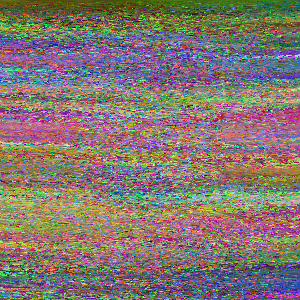
Below are some of the experimental pieces created during this process, each representing computational attempts to find the right balance between cryptographic constraints and visual appeal.
Failed aesthetic trials:
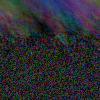



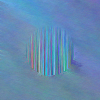
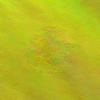
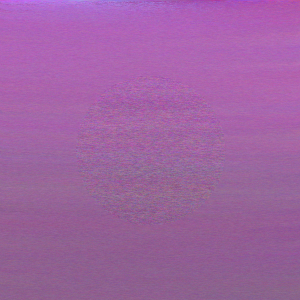
After many trials, the wheel motif was found to be satisfying enough to serve as the basis for creating larger and more resource-consuming pieces.
Mining a single pixel takes on average, 1 - 3 seconds. The small 300×300 piece requires around two days of continuous computation, consisting of 90,000 pixels, each representing a solved cryptographic puzzle.
The method is fully deterministic, meaning that the same seed would always yield the same artwork.
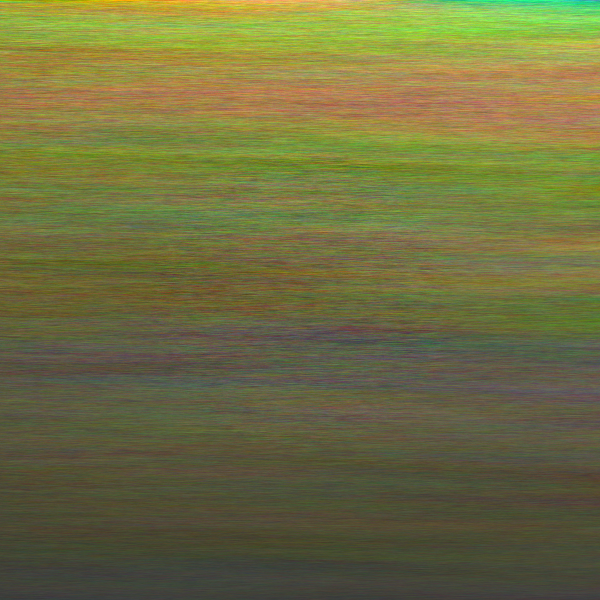
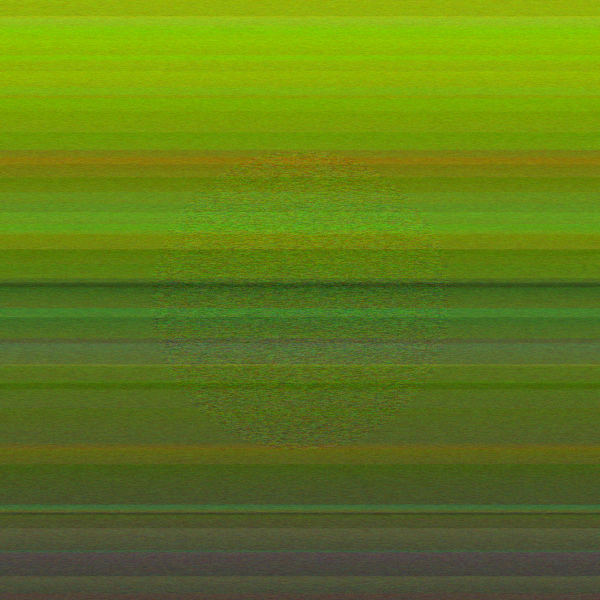
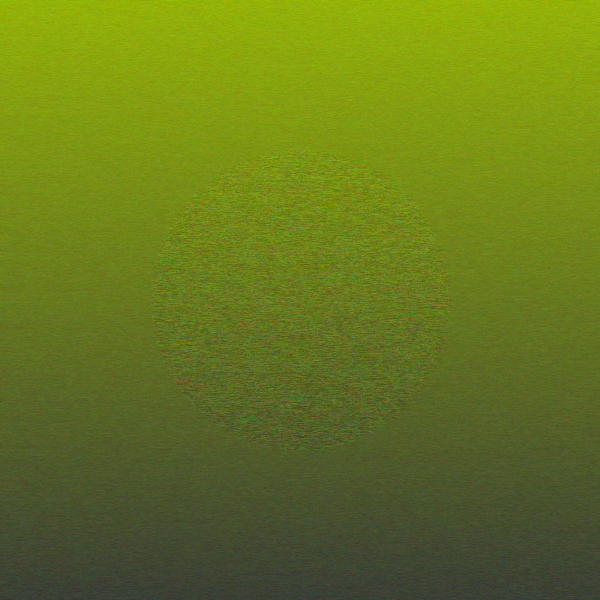
This technique is also unforgeable. Attempts were made to recreate a similar visual output in seconds — bypassing the pixel-by-pixel mining — but they proved impossible. What makes the result particularly difficult to imitate is its structure: the background of the circle is organic, with irregular patterns that look as though they were shaped by nature rather than computed by a machine. The cryptographic constraints and the sequential dependency of each pixel on the previous one make shortcuts unattainable. The only way to produce the image is to perform the work.
Failed forging attempts:

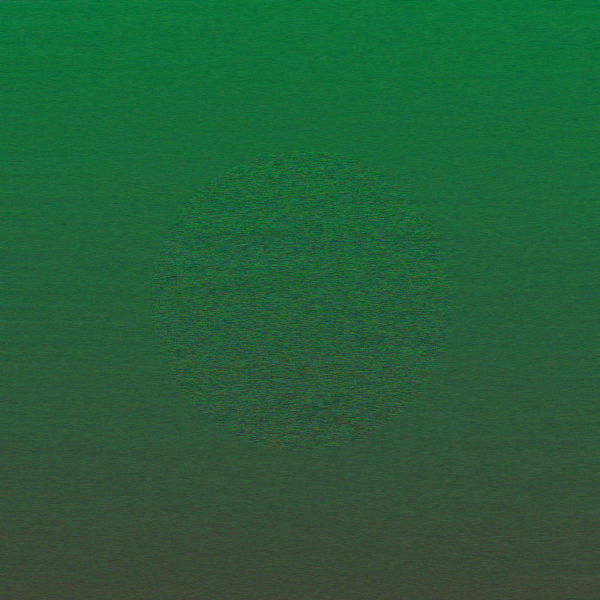
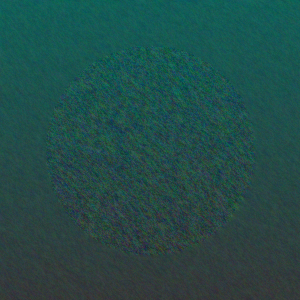



Below are the completed works — pieces that have been fully mined, pixel by pixel, from seed to final image. Each piece preserves the full mining record: hover over any pixel to reveal its coordinates, RGB values, computation time, and the number of nonces tried before finding a valid solution.
Completed Works
Mined in 5 days, 2 hours, 14 minutes (122.23 hours total)
Mined in 1 day, 11 hours, 16 minutes (35.27 hours total)
Mined in 1 day, 22 hours, 55 minutes (46.92 hours total)
Mined in 1 day, 4 hours, 49 minutes (28.83 hours total)
Mined in 2 days, 19 hours, 20 minutes (67.35 hours total)